Explaining async/await in 200 lines of code

In the previous article, we learned how to implement a simple but workable event loop. However, programs which are supposed to be run by the event loop are full of callbacks. This is the usual problem of event-loop-driven environments. When business logic becomes reasonably complicated, callbacks make program's code hardly readable and painfully maintainable. And the callback hell begins! There is plenty of ways to deal with the artificial complexity arose due to callbacks, but the most impressive one is to make the code great flat again. And by flat, I mean callback-less and synchronous-like. Usually, it's done by introducing async/await syntactic feature. But every high-level abstraction is built on top of some basic and fundamental ideas. Let's check the async/await sugar out and see what exactly happens under the hood.
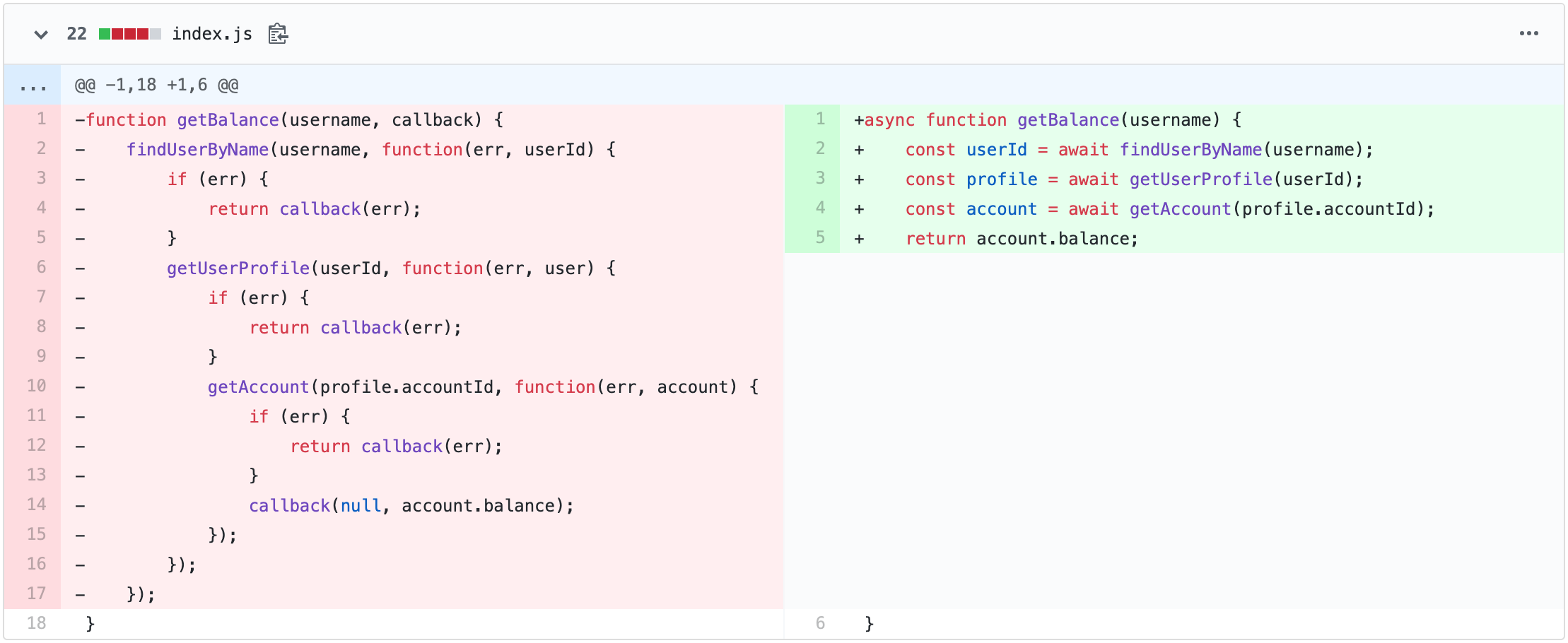

Callbacks vs. async/await (code excerpt).

Read more

Explaining event loop in 100 lines of code

There is plenty of articles out there about the event loop. However, as a software engineer, I prefer to read code, not text. And there is no better way of learning a new concept than implementing it yourself. So, let's try to grasp the idea of the event loop by coding a new and shiny one.

In the article, I'll try to describe the idea of the event loop in general, not a specific implementation of the event loop in Node.js or Python, or some other language/library.

Roller coaster

Read more

Truly optional scalar types in protobuf3 (with Go examples)

In contrast to protobuf2 there is no way in protobuf3 to mark some fields as optional and some other fields as required. Instead, any field might be omitted leading this field to be set to its default zero-value. I believe there were many good reasons for such a design decision. However, while this behavior might be superior to the proto2's explicit distinction between required and optional fields, it also has some unfortunate implications.

Gopher + protobuf = love

Read more

Node.js Writable streams distilled

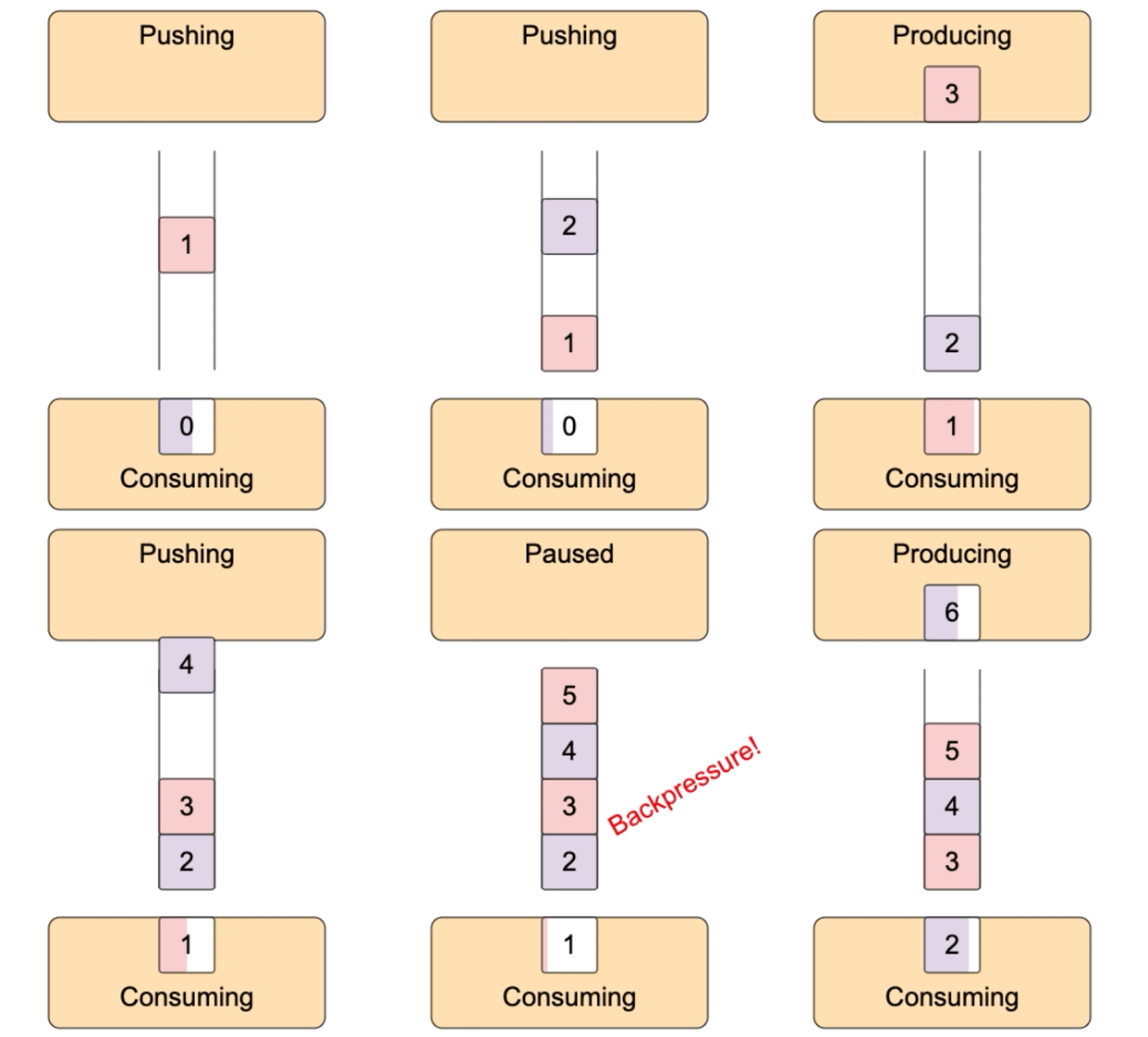
Writable streams are an abstraction for a destination to which data is written... And this time it's a concise abstraction! Compared to vague readable streams (multiple operation modes behind single abstraction) writable streams implement only one mode and hence expose only one essential method write(chunk). Nevertheless, the idea of writable streams is not trivial and it's due to one nice feature it provides - backpressure. Let's try to wrap our mind around writable stream abstraction.

Producer–Consumer problem visualization.

Read more